Trusted commercial coverage · 50+ years combined experience
Inland Marine Insurance in Oregon & Washington: The Critical Coverage That's Often Missed
Protect the tools, equipment, and materials that leave your building every day, on the truck, on the job site, or in someone else's warehouse. If your property moves, your coverage should move with it.
Need coverage? Call for a live inland marine insurance quote with a licensed agent or book a callback at your convenience.
4.9/5 rating · 40k+ insured people · Licensed in Oregon & Washington · English & Spanish
WHY CHOOSE US
The Coverage Gap Most Business Owners Don't Find Until a Claim
Here's the thing about a commercial property policy: it's tied to an address. Your building, your office contents, your shop floor — all covered at the location printed on your declarations page. The moment that equipment and inventory rolls into a work van, hits the road, or sits on a client's job site for the weekend, the protection gets thin fast.
That gap is exactly what inland marine insurance exists to close.
Inland marine is a floater policy, which means the coverage follows the property instead of the address. Contractor tools at a Bend roofing job. A case of camera bodies heading to a wedding in Hood River. Forty thousand dollars of HVAC units on hold in a Tacoma staging yard. A custom trade show booth sitting in a Las Vegas convention hall loading dock. If it moves, or if it lives somewhere other than your premises, inland marine insurance coverage is usually the only policy in your stack that responds.
The loss that isn’t hypothetical
Property that leaves a secured building is easier to steal, get damaged in an accident, or go missing, and harder to get back. Industry groups put annual U.S. losses from construction equipment theft in the $300 million to $1 billion range, and an FBI National Incident-Based Reporting System analysis of more than 15,000 site thefts found that hand and power tools showed up in roughly 40% of incidents — about three times as often as heavy equipment. The average loss across those incidents came in around $6,000, and fewer than 7% of stolen items were ever recovered.
So, the practical question isn't whether the gear comes back. It's whether you can write the check to replace it on a Tuesday morning and still make payroll on Friday.
Five signs it's time to look at inland marine
Your exposure shifts as your business changes. These are the situations that make us ask a different set of questions on a commercial inland marine insurance review:
Equipment regularly leaves your premises. Even one overnight in a truck bed counts. Theft from vehicles is one of the most common claims we see.
You work at client sites or on multiple job sites. Your property policy's off-premises sublimit is often measured in a few thousand dollars, nowhere near the value of what most contractors actually carry onto a site.
You store anything off-site. A rented storage unit, a supplier's warehouse, a staging yard, a seasonal satellite shop.
You hold, repair, transport, or install property that belongs to someone else. Once it's in your care, custody, or control, your general liability policy won't rescue you, that's a different exposure requiring a different policy.
You bought or rented new equipment this year. Replacement cost has climbed hard over the last few years, and a schedule written even 3 years ago is probably short.
If two or more of those describe your operation, it's worth a 15-minute conversation before your next renewal, especially if nobody has looked at your inland marine insurance coverage since you started the business.

A van break-in is one of the most common inland marine claims we see — and one of the least covered by a property policy.
COVERAGE SHOWCASE
What Type of Inland Marine Coverage Do You Need?
Commercial inland marine insurance isn't one product, it's a family of forms; each built around a different kind of property. Most businesses only need one or two. Your job is to know which.
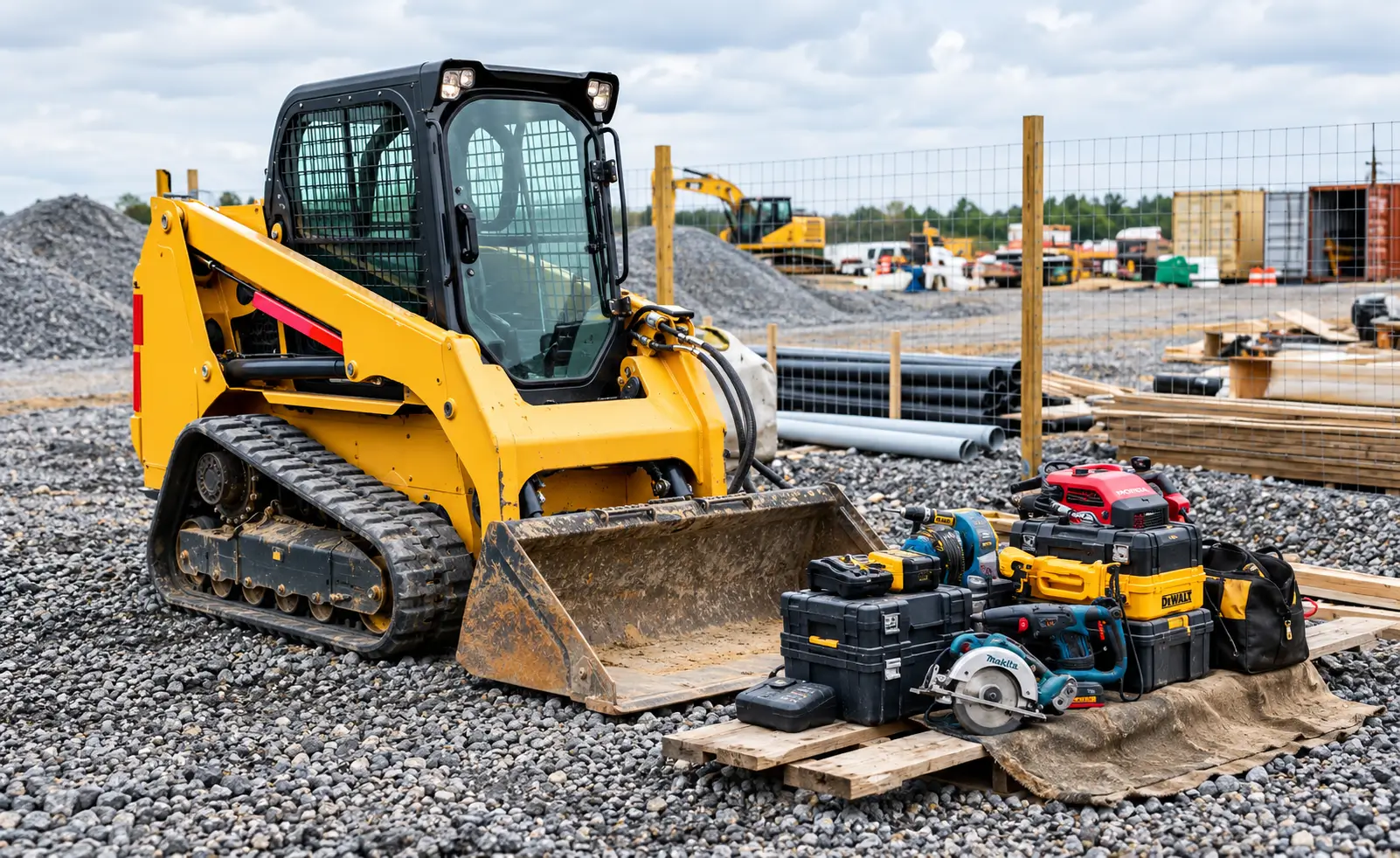
Contractor’s Equipment Floater
The workhorse of the inland marine coverage landscape. Covers your tools, machinery and equipment wherever they are: the job site, the truck, the storage yard, the client's driveway. Written on an all-risk (open perils) basis in most programs, so theft, fire, vandalism, water damage and transit collisions are all in play unless specifically excluded.
Can be written with a blanket limit for the whole inventory, scheduled item-by-item for the expensive pieces, or both. Rented and borrowed equipment is commonly included, and rental reimbursement, paying for a substitute machine while yours is being repaired, is an endorsement worth asking about.

Installation Floater
Covers the materials, supplies and fixtures you're installing, from the moment you pick them up at the supplier through temporary storage and installation, until the customer signs off on the work. This one often picks up the labor you've already sunk into a partially finished install, which matters more than most people expect. Electrical, HVAC, plumbing, cabinetry, glazing, solar, this is the form that stops a damaged pallet from becoming a rewritten contract.

Motor Truck Cargo
Covers goods belonging to others while you transport them.
Note the distinction: an equipment floater protects your property; cargo coverage protects your customer's. If you haul client materials, finished goods, or freight for hire, this is not optional.
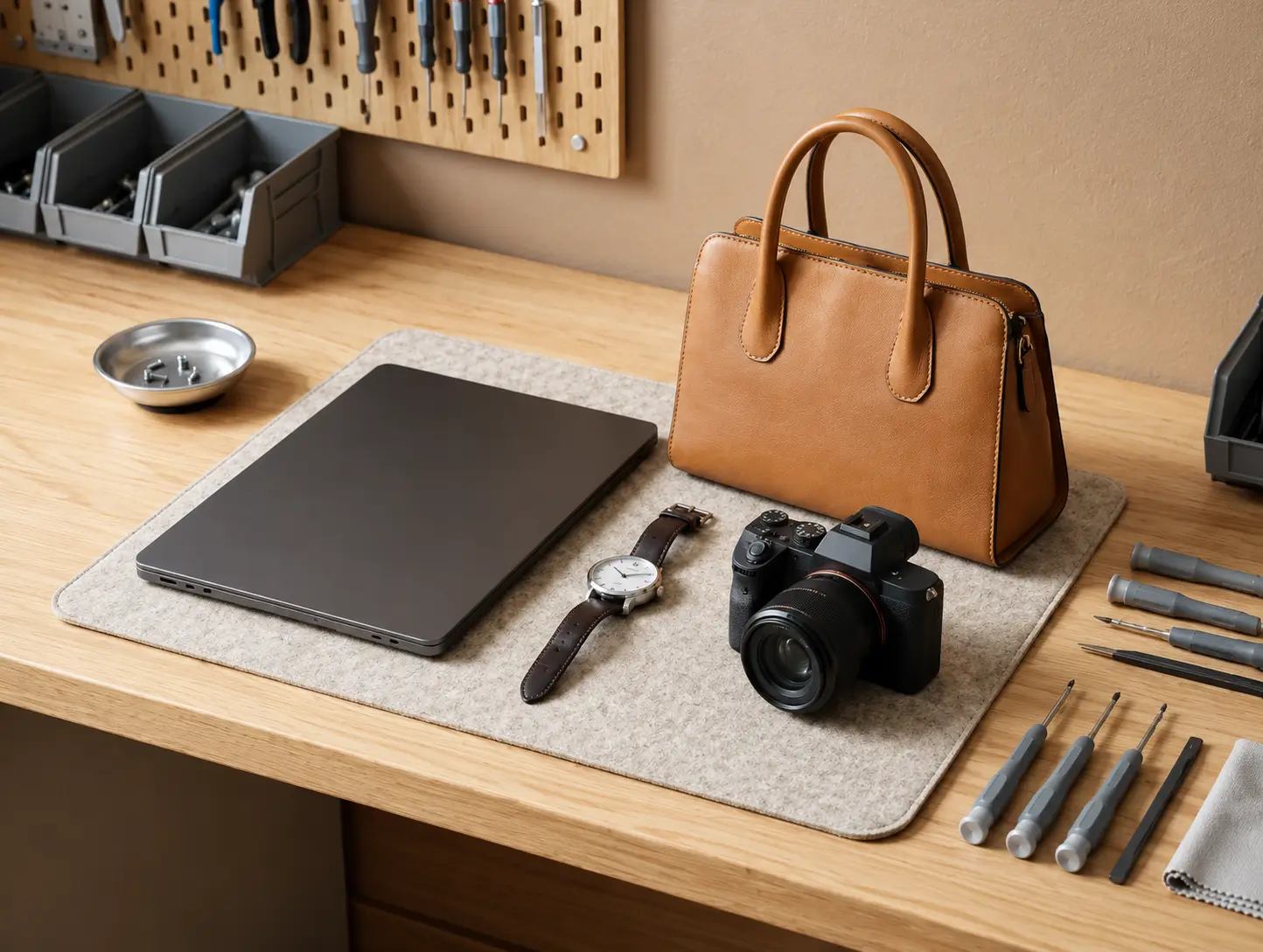
Bailee’s Customer Coverage
For property that belongs to someone else but is temporarily in your care, custody, or control. Repair shops, dry cleaners, jewelers, galleries, self-storage operators, IT service shops, pet boarding, equipment dealers taking units on trade.
General liability specifically does not cover damage to property in your care, that's the whole reason this form exists.

Electronic Data Processing (EDP) & Computer Coverage
Laptops, tablets, servers, networking gear and the cost to recover the data on them.
Standard property forms handle equipment at your address; EDP coverage follows it to client sites, remote installs, and employee home offices.

Exhibition, Fine Art & Special Property Floaters
Artwork, gallery inventory, musical instruments, trade show booths, medical and scientific instruments, food truck kitchens, solar installations, agricultural machinery.
These are frequently written on agreed value rather than depreciated value, important, because a booth you spent $40,000 building isn't worth $6,000 on a depreciation schedule, and it still costs $40,000 to rebuild.
WHO WE PROTECT
Businesses Across Oregon & Washington That Depend on Movable Property
The Pacific Northwest economy runs on things that move. Contractors working I-5 corridors, food trucks and mobile caterers, Willamette Valley and Yakima producers shipping product east, timber and ag operations, creative studios, and a very large number of one-truck trades businesses. Almost all of them have inland marine exposure whether they've ever heard the term or not.
Contractors & construction trades
Electricians, HVAC, plumbing, roofing, framing, excavation, solar installers. Highest equipment theft exposure of any group we insure.
Landscapers, arborists & snow removal crews
Mowers, chippers, trailers and attachments that live outdoors for months.
Delivery, freight & courier operations
Motor truck cargo plus the tools and gear riding along.
Food trucks, mobile caterers & pop-up vendors
The equipment is the building, which a property policy at a home address won't touch.
Photographers, videographers & event production
Creative gear that creates value by getting out on location.
Medical offices, mobile clinics & laboratories
Portable diagnostic units, imaging trailers, field sampling equipment.
Tech firms & MSPs
Devices that spend more time in cars and client racks than on your desk.
Galleries, antique dealers, jewelers & consignment shops
Bailee exposure on inventory you don't own.
Wineries, breweries, farms & food producers
Inventory in transit, at offsite cold storage, or on consignment.
Repair shops, dry cleaners & IT service centers
Customer property on your premises overnight.
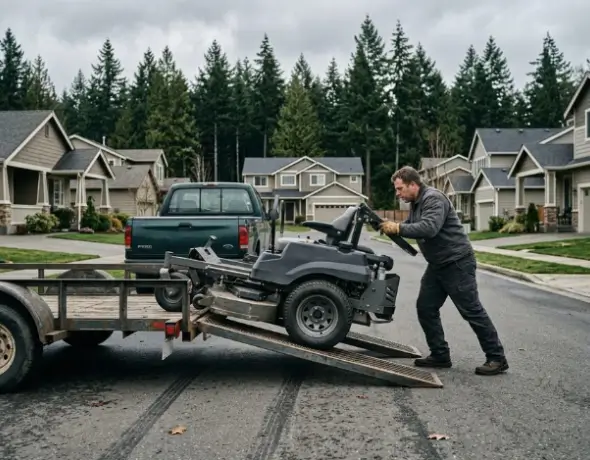
Outdoor storage, seasonal swings and multi-county routes are the three things that move an inland marine premium most.
What this looks like in practice
A Beaverton electrician van gets broken into at 2 a.m. parked in your employee's driveway. Twenty-two thousand dollars in tools and test gear walk away. The property policy doesn't respond, the property never left the insured care; it left the insured address. An equipment floater written with mysterious disappearance does.
EQUIPMENT FLOATER RESPONDS
A Medford HVAC contractor is setting up rooftop units when the rigging shifts and damages two of them before the owner accepts the work. The installation floater responds for the equipment and the reinstall labor.
INSTALLATION FLOATER RESPONDS
A Yakima distributor is hauling a refrigerated load down I-82 when the trailer rolls. Motor truck cargo responds for the shipper's product.
MOTOR TRUCK CARGO RESPONDS
COVERAGE DETAILS
What Inland Marine Insurance Covers — and What It Doesn't
Most inland marine forms are written on an all-risk (open perils) basis, which means any direct physical loss is covered unless the policy names it as an exclusion. That's broader than a named-perils form, which only pays for the perils it lists. All-risk is what we recommend for most contractors, but the exclusions are where the surprises live, so read this part.
Typically covered
Theft (including from vehicles, subject to conditions)
Fire
Smoke
Explosion
Vandalism
Windstorm
Hail
Water damage
Vehicle collision and overturn during transit, and, depending on form
Mysterious disappearance and the labor already invested in an installation.
Commonly excluded
Flood and earthquake — almost always excluded, and this one matters here. The Cascadia Subduction Zone is a real Pacific Northwest exposure, and the Northwest Insurance Council notes that only about 10–20% of households in the region carry earthquake coverage. If you stage expensive equipment outdoors in the Willamette Valley or along the Puget Sound, ask us specifically about difference-in-conditions options.
Vehicles. Anything with a license plate belongs on a commercial auto policy. Inland marine covers what's inside the truck, not the truck.
Property permanently kept at your main location. That's commercial property or BOP territory.
Wear and tear, rust, corrosion, mechanical breakdown. Some carriers offer a breakdown buy-back endorsement on certain classes.
Employee dishonesty. Needs a separate crime policy.
Voluntary parting, inventory shortage and unexplained disappearance without evidence of loss.
Defective materials, faulty design and faulty workmanship.
Ocean and air shipments unless specifically endorsed. Ocean marine is a separate line, which, despite the confusing name, is not what inland marine insurance is.
Deductibles
Typically $500–$2,500 per occurrence. Watch for separate, higher deductibles on theft and on unattended vehicles — that’s a common place for a claim to come back smaller than expected.
Valuation
Valuation comes in three flavors: replacement cost (what a new one costs today), actual cash value (replacement cost minus depreciation), and agreed value (a pre-set number you and the carrier both signed off on). For tools that get replaced often, replacement cost is usually worth the extra premium.
THE SITUATION
COMMERCIAL PROPERTY / BOP
INLAND MARINE
COMMERCIAL AUTO
GENERAL LIABILITY
Tools stolen from your job site or truck
Off-premises sublimit only, often very low
Primary coverage
—
—
Your work van is in a collision
—
—
Covered
—
Your inventory damaged while in transit
Not covered
Covered
—
—
A client’s property damaged while in your care
Not covered
Covered (Bailee)
—
Care, custody & control usually excluded
Materials damaged before installation
Not covered
Covered (Installation floater)
—
—
Building under construction
Not covered
Covered (Builder’s risk)
—
—
Office contents at your address
Covered
Not covered
—
—
Someone slips and falls on your job site
—
—
—
Covered
Earthquake or flood damage
Excluded
Excluded
Limited
—
RATES & GETTING A QUOTE
What Does Inland Marine Insurance Cost?
There's no rate card for this line, and that's worth understanding before you shop. Inland marine is priced off the value of the property you're insuring and the specifics of how you operate, and in both Oregon and Washington, a meaningful share of these forms are priced by the carrier rather than set by a filed manual rate, which means two quotes for the same schedule can land in noticeably different places. Comparing the market is worth the twenty minutes.
What actually moves the number
01
Total value of the property you're insuring — the single biggest driver.
02
Which forms you need — an equipment floater, an installation floater, and motor truck cargo are three different risks.
03
Scheduled vs. blanket limits — scheduling high-value items item-by-item costs a bit more and buys you precision.
04
Scheduled vs. blanket limits — scheduling high-value items item-by-item costs a bit more and buys you precision.
05
Your deductible — raising it lowers premium, but only pick a number you could actually absorb on a bad week.
06
Where it's stored and how it's secured — locked and alarmed storage, GPS tracking, and indoor vs. outdoor storage all earn credits.
07
Your territory — dense metro areas with higher theft frequency price differently than rural routes, and a crew working Portland and Vancouver has different exposure than one working a single county.
08
How far and how often the property travels.
09
Claims history — prior losses can move a premium dramatically, sometimes two or three times what a clean account pays.
Most small inland marine programs land somewhere between a few hundred and a few thousand dollars a year, with heavy equipment schedules, high-limit installations and cargo operations running well above that. Set against what a single stolen skid steer costs to replace, it's usually one of the cheaper conversations you'll have with us.
What to have ready for an inland marine insurance quote
An equipment schedule with current replacement values and serial numbers where available
How and where property is stored overnight, and what security is in place
Your largest single project value, if you're a contractor
How far and how often property moves, and whether it ever crosses state lines
Any losses in the last three to five years
QUICK TIP
The fastest path to an accurate number is a real quote with a licensed agent, not an online estimate. Inland marine is underwritten on specifics, generic web forms miss most of what actually drives the price.
If you're already bundling a BOP, commercial property or commercial auto policy, adding inland marine through the same program is often less expensive than buying it standalone. We'll show you both ways.
LET’S TALK
Let's make sure nothing you own is off the map
If your tools, materials or inventory spend time away from your building, there's a good chance part of your operation isn't covering the way you think it is. Call us and we'll walk your schedule line by line, tell you honestly what's exposed, and price it across the carriers we work with.