
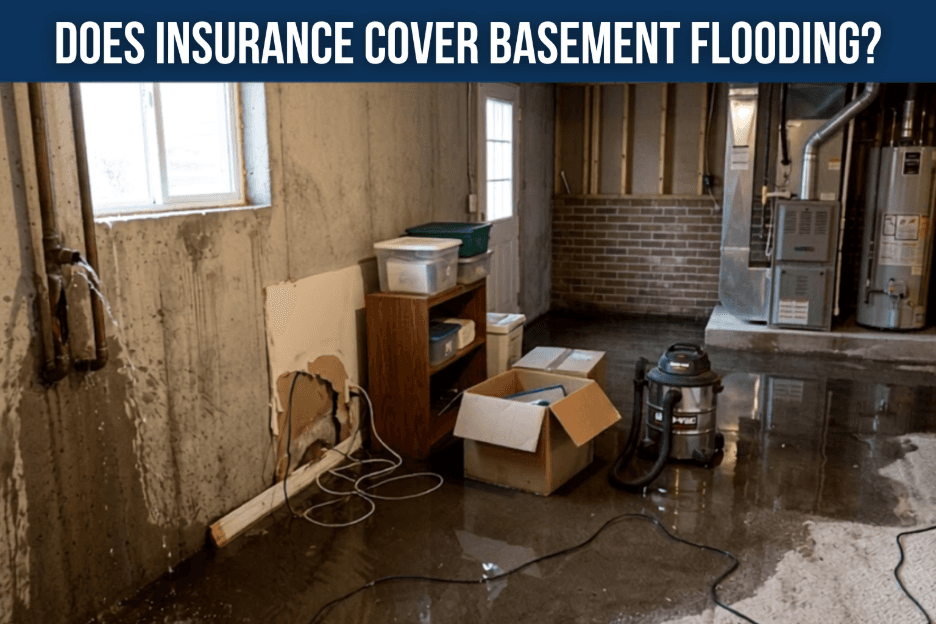
Quick Answer: Standard Homeowners insurance will cover sudden basement flooding from a burst pipe or backed-up appliance within your house. The policy may also cover water backup caused by sewer line backflow due to a problem originating outside your house, but this is often an optional coverage you must select. Coverage for floodwater rising from outside or gradual seepage from groundwater would require a separate Flood insurance policy. Renters insurance usually works the same way to cover your belongings, minus the structure itself, since renters insurance never covers the building.
A wet basement feels like the kind of thing insurance should automatically cover. But it often doesn't, so if this seems important for your situation, be sure to ask our experts.
Why "Flooding" Means Two Different Things to Your Insurer
The question is understandable. The term "flooding" gets used for two very different events: water that backs up from a pipe inside your home, and water that rises from outside and finds its way in. Homeowners insurance treats these as separate risks, and that distinction decides whether your claim gets paid or denied, depending on your optional coverage selections. A washing machine hose that bursts at 2 a.m. is a covered water damage claim in most standard policies. A storm that pushes groundwater through your foundation walls is not — that's flood damage, and it needs its own policy through the National Flood Insurance Program or a private flood carrier.
Does Renters Insurance Cover Basement Flooding?
Renters insurance works similarly to a Homeowner policy, just for a smaller slice of the problem. If your basement apartment floods because a pipe fails, you renters policy can help replace your furniture, electronics, and personal property up to your coverage limit. What it won't touch is the building itself — the drywall, flooring, and foundation are your landlord's responsibility, which is exactly why landlords carry their own landlord insurance policy separate from your Renter coverage.
The Sump Pump Gap Almost Everyone Misses
Here's the thing most people miss when sump pump failure sits in its own gray zone. If your sump pump quits during heavy rain and your basement fills with water, that's typically excluded from a standard homeowner's policy unless you've added a sump pump or water backup endorsement. This is one of the most common gaps for homeowners in the Pacific Northwest to run into, since rainy seasons put real strain on aging pump systems. A 2023 Insurance Information Institute analysis found water damage and freezing was among the top reasons homeowners' claims nationally, and sump pump failure is a recurring driver of those losses.
Sewer Backup: A Separate Risk, A Separate Fix
Sewer backup is a related but distinct issue, and it's worth separating from both flood and pipe-burst scenarios. When municipal sewer lines backup during maintenance or due to heavy storms, wastewater can push back up through your basement drains. Standard homeowners and renters policies exclude this by default. A sewer backup endorsement — usually inexpensive, often under $50–$100 a year — adds it back in. If you own a rental property or a second home near a floodplain, this endorsement matters even more, and it's something we walk clients through when setting up vacation home insurance for properties that sit vacant part of the year and can't be checked on daily.
Where Standard Policies Actually Break Down
That sounds obvious — but most people do the opposite: they assume a general homeowner policy is comprehensive enough to handle any water event, and they only find out otherwise after the adjuster report comes back. In most cases, a standard policy handles sudden, accidental internal water damage. It breaks down specifically at the line between "water that came from inside your plumbing" and "water that came from outside your foundation."
Don't Forget Liability and Association Coverage
If you're a homeowner with meaningful equity in your property, it's also worth asking whether your liability and property limits stack up against a major loss. This is where umbrella insurance comes in — it doesn't add flood coverage, but it extends liability protection if a basement flood leads to mold, injury claims, or a dispute that outpaces your base policy limits. For anyone managing a rental property through an association, checking how flooding responsibility is divided under your HOA coverage is worth doing before storm season, not after.

How to Actually Close the Coverage Gap
The honest fix here isn't complicated: pair your homeowners or renters policy with a sump pump/water backup endorsement, add a sewer backup rider if your area has older municipal lines, and get a standalone flood policy if you're anywhere near a flood zone map's edge — FEMA's maps are more conservative than they used to be, and "moderate risk" areas still see basement flooding regularly. A licensed agent can review your specific address and tell you which of these actually applies to you, rather than guessing from a generic checklist.
Basement flooding is rarely a single, simple claim. It's usually two or three overlapping causes — a failed pump, an aging sewer line, a storm that pushed both past their limits — and your coverage needs to match that complexity. Reviewing your policy before the next storm season is a lot cheaper than reviewing it after.
Frequently Asked Questions
Q: Does homeowners insurance cover basement flooding?
A: Only if the water damage was sudden and internal, like a burst pipe. Flooding from outside groundwater, storms, or rising rivers requires a separate flood insurance policy.
Q: Does renters insurance cover basement flooding?
A: It can cover your personal belongings if the flooding comes from a covered internal source, such as a plumbing failure. It never covers the building structure, which falls under the landlord's policy.
Q: What's the difference between flood insurance and water damage coverage?
A: Water damage coverage in a standard policy handles sudden, internal events like burst pipes. Flood insurance, sold separately through the NFIP or private carriers, covers external floodwater rising from storms, rivers, or heavy rain.
Q: Is sewer backup covered by a standard policy?
A: No. Sewer backup is almost always excluded unless you add a specific sewer backup endorsement, which is typically an affordable add-on to your existing policy.
Q: How do I know if I need a separate flood policy?
A: If your property sits in or near a FEMA flood zone, has a history of basement water issues, or you simply want protection against a growing risk, a standalone flood policy is worth pricing even if it isn't legally required.
Have questions about your specific coverage? Best Coverage LTD can review your homeowners, renters, or landlord policy and show you exactly where the basement flooding gaps are — get a quote here.